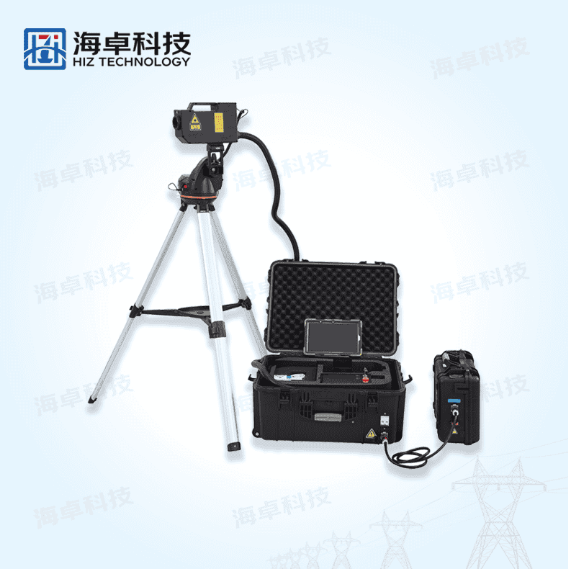
With the rapid development of power technology, a device called the laser line-cleaning instrument is gradually becoming a powerful assistant in power grid operation and maintenance. It utilizes advanced optical technology to quickly eliminate various safety hazards on high-voltage transmission lines without power outages or tower climbing, significantly enhancing the efficiency and safety of power maintenance.
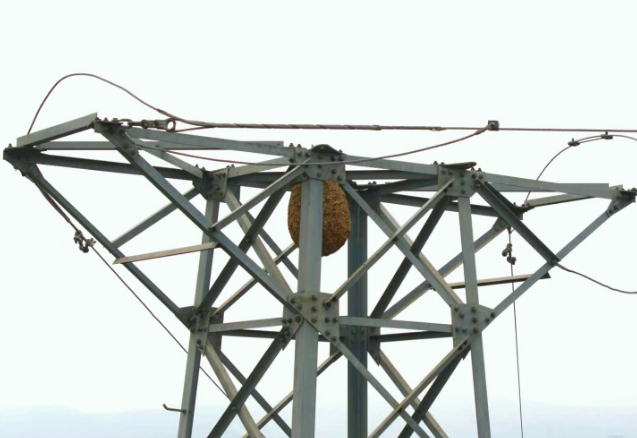
The core of the laser line-cleaning instrument lies in its high-energy-density laser beam. Once the device is activated, the laser is focused through a precise optical system, instantly generating extremely high temperatures. This high temperature can rapidly act on foreign objects hanging on the lines, causing them to be cut, carbonized, or even vaporized. Whether it is common kite strings, plastic films blown by the wind, large advertising banners, agricultural sunshades, or even tree branches close to the lines, they will all quickly lose their structural strength in the face of the laser and fall off the conductors, restoring the smoothness of the lines.
This non-contact operation mode has the advantage of completely transforming the traditional manual tower climbing method. The laser obstacle removal device enables ground remote operation, which not only avoids the waste of human resources but also eliminates the possibility of personnel electric shock or falling, truly achieving "commanding the army from the tent and winning battles from a thousand miles away".
However, every technology has its limitations. Although the laser de-obstruction device is highly efficient, it also has obvious shortcomings. First, the transmission of laser is greatly affected by the weather. In bad weather such as heavy rain, thick fog or strong wind, the focusing effect of the laser will be greatly reduced, and it may even fail to work effectively. Secondly, for some special materials with high reflectivity (such as mirrors) or high melting points, the clearing efficiency of the laser will significantly decrease. In addition, high-energy laser beams themselves are dangerous. If they are not operated properly or the equipment lacks protection mechanisms, they are very likely to cause accidental injuries to people and facilities around, or even ignite dry grass and trees nearby, causing secondary disasters.
The HIZ-NT-QZY high-voltage line laser obstacle removal device from Guangxi Hai Zhuo Technology features a fiber laser with an electro-optical conversion efficiency exceeding 35% and is equipped with an international standard QBH output head, ensuring stable laser transmission. More importantly, it has made extensive redundant designs in terms of safety, integrating multiple intelligent protection functions such as tilt angle sensing to prevent toppling, automatic warning for safe distance, and automatic light cut-off upon personnel intrusion. Coupled with an adjustable high-definition display screen, operators can precisely hit obstacles and avoid operational risks from the source, achieving truly zero-harm maintenance for power transmission lines.