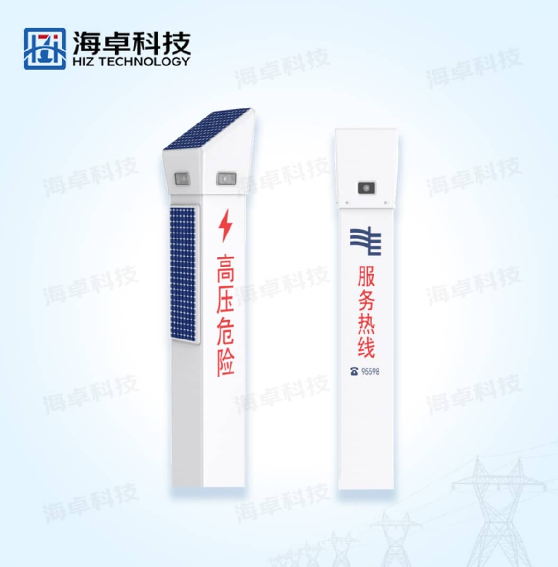
The core function of traditional marker posts is limited to basic identification, simply informing workers and passersby that underground pipelines are present at the site. In open environments with proper maintenance and compliant construction practices, these conventional markers can serve as basic warnings, meeting the fundamental protection needs for low-risk pipeline networks.
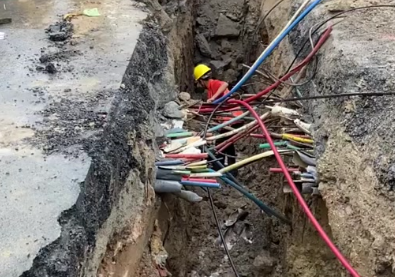
However, passive monitoring is a critical flaw that traditional marker posts cannot overcome. They rely solely on being visually noticed by people and lack any capability for early warning or intervention. At night, during unauthorized excavation, reckless construction at sites, driver distraction, or when dense vegetation obscures visibility, traditional marker posts become completely ineffective—rendering their protective value null.
Underground high-voltage power cables, main gas pipelines, and communication fiber-optic cables all constitute vital urban lifeline infrastructure. If accidentally damaged or severed by machinery, the consequences can be devastating: widespread power outages and gas disruptions, total communication failure, and in severe cases, gas explosions or pipeline collapses—directly endangering public safety and causing massive economic losses. Relying solely on a passive, non-communicative traditional marker post offers no defense against excavation risks, leaving significant safety vulnerabilities in pipeline management.
In this context, intelligent marker posts equipped with proactive prevention capabilities have become essential equipment for critical pipeline protection. Compared to conventional models, Guangxi Haizhuo Technology's HIZ-SD-BZZ Intelligent Anti-Excavation Marker Post represents a revolutionary upgrade in protection:
First, it enables 24/7 active monitoring through a 360-degree panoramic surveillance system combined with AI-powered intelligent recognition, accurately detecting construction machinery such as excavators and hydraulic breakers as soon as they enter the pipeline protection zone.
Second, it triggers real-time alerts across multiple channels—activating high-decibel audiovisual alarms on-site to deter intruders while simultaneously sending warning notifications to backend management terminals. This allows for early intervention before the excavator’s bucket even touches the pipeline, effectively preventing damage at its source.
Put simply: traditional marker posts are static, passive road signs, whereas intelligent marker posts act as proactive sentinels guarding pipelines. Risk management should be clearly tiered: for ordinary suburban roads and low-risk, unoccupied areas, traditional marker posts may suffice for basic identification. However, at critical pipeline nodes involving high-voltage cables, main gas lines, or primary fiber-optic cables—where excavation could lead to catastrophic outcomes—the outdated marker posts must be phased out entirely and replaced with smart marker posts capable of monitoring, alarming, and deterring threats, thereby strengthening the safety defenses of the city’s underground lifelines.